One Framework, Many Departments
In today’s complex and fast-changing Philippine business environment, managers are expected to lead diverse teams, navigate uncertainty, and deliver results across departments—all at once. Yet many organizations still struggle with a critical leadership question: how to implement this leadership style effectively across different functions like HR, operations, and sales.
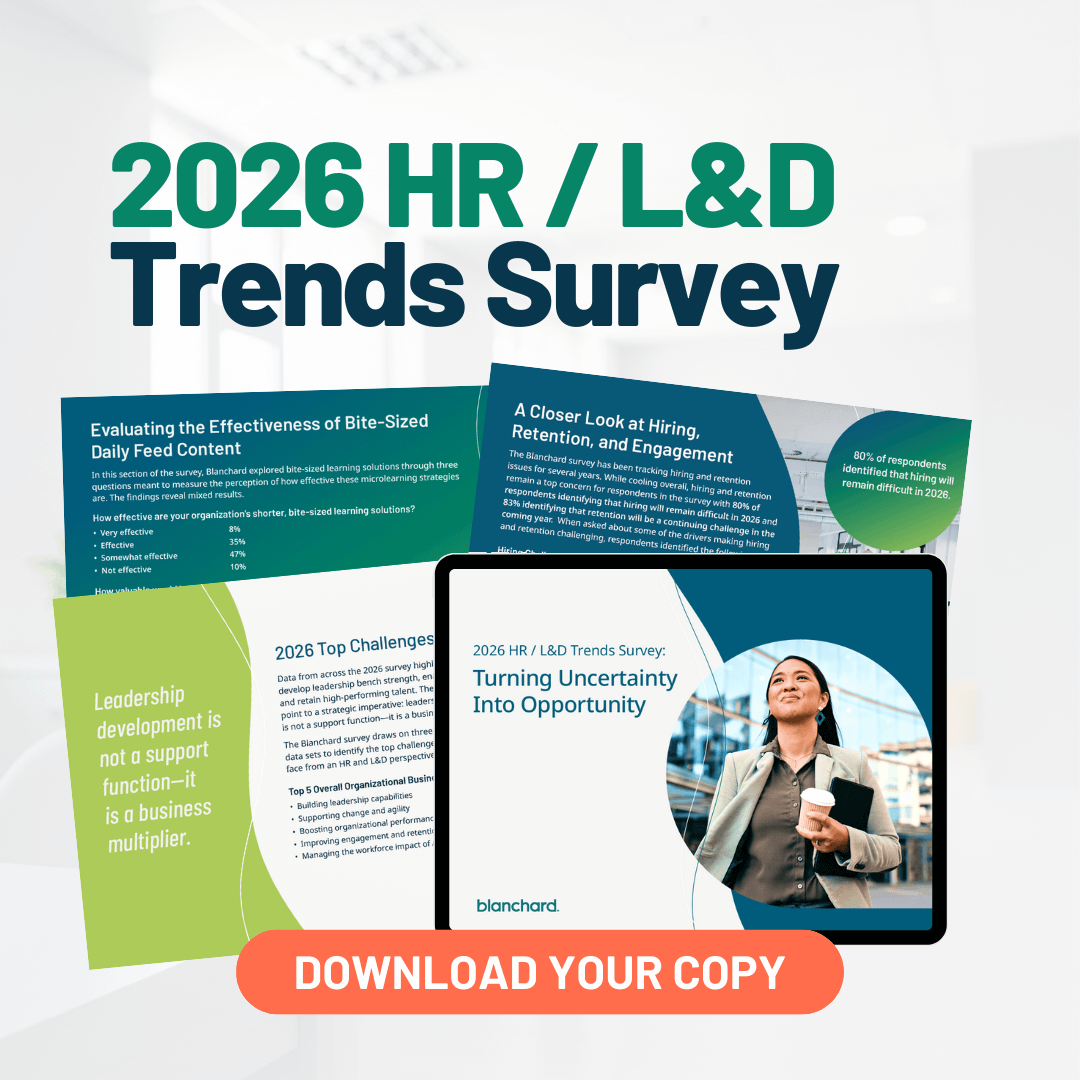
SLII® (formerly known as Situational Leadership II) offers a powerful answer. Rather than prescribing a one-size-fits-all leadership style, SLII® equips managers with the ability to adapt their leadership approach based on the development level of their people. This adaptability is what separates average managers from highly effective ones—especially in organizations with cross-functional complexity. In fact, the 2026 HR/L&D Trends Survey highlights that building leadership capabilities is the top business challenge for 48% of organizations, signaling that leadership is no longer just a support function—it is a ‘business multiplier’.
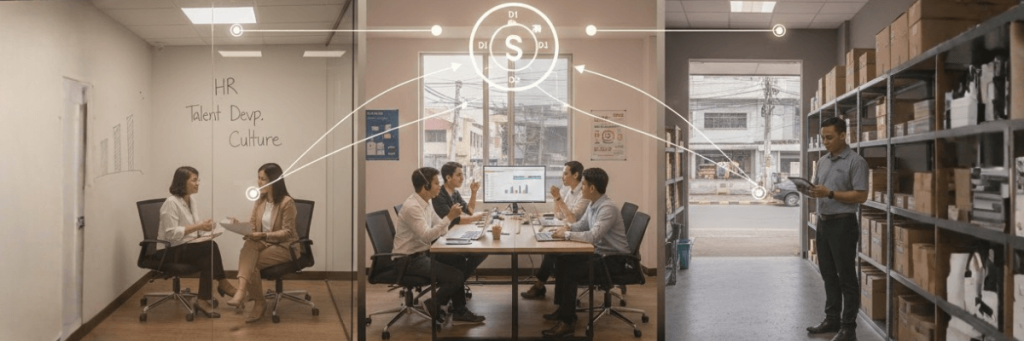
As leadership training and consulting professionals working closely with Philippine organizations, we consistently see that manager effectiveness improves dramatically when leaders understand how to apply this leadership style across departments. In this article, we explore how SLII® works, how it applies differently in HR, sales, and operations, and how organizations can successfully embed it as a core leadership capability.
SLII® Overview and Development Levels
At its core, SLII® is built on a simple yet powerful idea: different people need different leadership styles depending on their competence and commitment for a specific task.
SLII® identifies four development levels:
- D1 (Enthusiastic Beginner): High commitment, low competence
- D2 (Disillusioned Learner): Some competence, low commitment
- D3 (Capable but Cautious Performer): High competence, variable commitment
- D4 (Self-Reliant Achiever): High competence, high commitment
Correspondingly, leaders apply four leadership styles:
- Directing (S1): High direction, low support
- Coaching (S2): High direction, high support
- Supporting (S3): Low direction, high support
- Delegating (S4): Low direction, low support
The real strength of SLII lies not in memorizing these models, but in accurately diagnosing development levels and responding with the right leadership behavior—a skill that becomes even more critical when managing across departments with different rhythms, pressures, and success metrics.
Applying the Model in HR, Sales, and Operations
One of the most common misconceptions about this leadership is that it applies only to people managers in general. In reality, its impact becomes even more powerful when applied intentionally across functions.
SLII in HR Teams
HR professionals often manage a mix of experienced specialists and emerging practitioners. For example, a new HR business partner may show enthusiasm but lack confidence in handling senior stakeholders (D1 or D2). In this case, coaching leadership (S2)—providing structure while building confidence—is essential.
More experienced HR leaders, on the other hand, may only need supporting or delegating leadership styles, especially when driving strategic initiatives like organizational development or culture change.
SLII in Sales Teams
Sales environments in the Philippines are fast-paced and performance-driven. New sales hires often require directing leadership to master processes, scripts, and product knowledge. As competence grows, managers must shift toward coaching and supporting styles to maintain motivation and resilience—particularly during quota pressure.
High-performing sales professionals at D4 thrive when leaders know when to step back and delegate, empowering them while staying aligned on outcomes.
SLII in Operations
Operations teams require precision, consistency, and accountability. Leaders often default to directive approaches—but this can backfire with experienced operators. This leadership style enables operations managers to adapt leadership styles based on task maturity, improving both compliance and engagement without sacrificing performance.
Across departments, the principle remains the same: effective managers adjust how they lead, not just what they expect.
Building Adaptive Leadership Mindsets
Implementing this kind of leadership is not just about tools—it’s about mindset. Many managers struggle because they believe consistency means using the same leadership style for everyone. In reality, adaptive leadership is what creates consistency in results.

This adaptability is crucial given that 36% of organizations now identify ‘supporting change and agility’ as a top-tier business challenge. When managers use the ‘2026 HR / L&D Trends Survey’ as a guide, it becomes clear that leaders who model agility become the linchpin connecting strategy to culture.
To build this mindset, organizations must help leaders:
- Recognize that leadership is situational, not personal
- Let go of default or comfort-based leadership styles
- Practice diagnosing development levels in real time
- Build emotional intelligence alongside technical leadership skills
This shift is particularly important in Philippine organizations where respect for hierarchy is strong. SLII reframes authority—not as control, but as responsiveness to people’s needs.


Coaching Leaders Through the Transition
One of the most critical success factors in implementing SLII is leadership coaching. While training builds awareness, coaching ensures behavior change. This shift toward a coaching-led approach is a global priority. The survey found that ‘coaching and mentoring people’ is the #1 leadership competency for the future, prioritized by 48% of organizations to drive performance through meaningful conversations.
Through coaching, leaders:
- Reflect on real leadership challenges
- Practice diagnosing development levels accurately
- Receive feedback on leadership style alignment
- Build accountability for consistent application

For Philippine organizations, coaching also supports leaders in navigating cultural nuances—such as balancing authority with approachability—while applying this leadership effectively.
Training Support Tools for SLII Adoption
Sustaining this requires reinforcement beyond the classroom. High-performing organizations support adoption through:
- Leadership job aids and diagnostic tools
- Manager toolkits for one-on-one conversations
- Peer learning sessions and leadership circles
- Integration into performance management and L&D systems
These tools help leadership move from theory into everyday leadership practice, ensuring long-term impact rather than short-term enthusiasm.
Making Managers More Flexible and Effective with SLII
Ultimately, the question is not whether this leadership works—but how well it is implemented. For Philippine organizations navigating growth, transformation, and increasing complexity, learning how to implement SLII across departments is no longer optional.
SLII® empowers managers to lead with flexibility, clarity, and confidence—regardless of function. When leaders adapt their style to their people, organizations see stronger performance, higher engagement, and more resilient leadership pipelines.
If your organization is looking to strengthen manager effectiveness, align leadership behaviors across departments, or embed this kind of leadership as a core capability, now is the right time to take action.
Connect with us to explore leadership training, coaching, and consulting solutions designed to help your leaders apply SLII where it matters most—on the ground, with real teams, delivering real results.
© 2026 Blanchard Philippines. All rights reserved. Unauthorized use, reproduction, or distribution of this content is strictly prohibited.