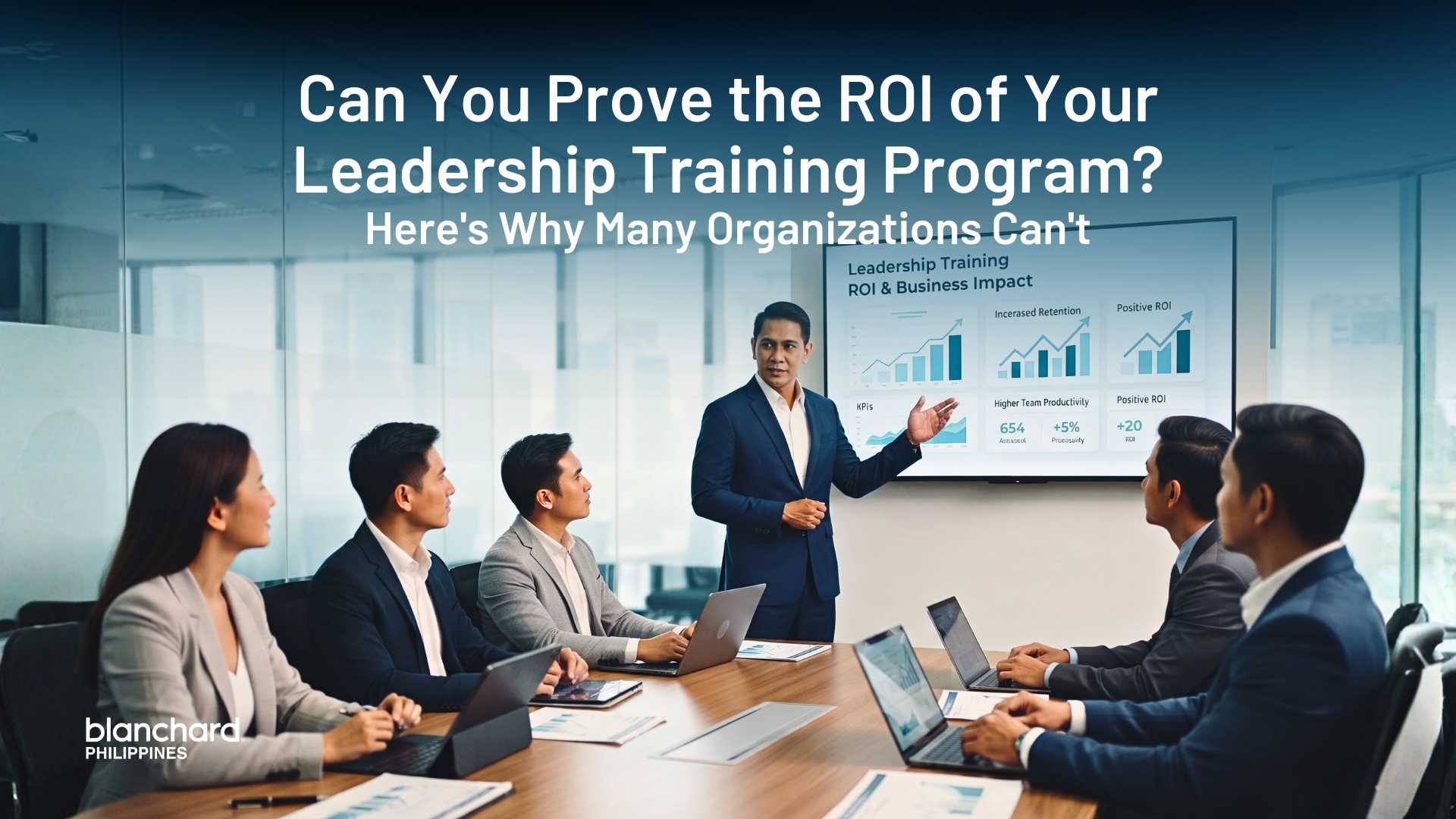
If your organization invested in a leadership training program this year, the second half of the year is the perfect time to pause and ask an important question:
Can you actually prove it improved leadership performance?
We know this is where many HR leaders, executives, and business owners find themselves. Perhaps your leadership metrics have barely moved. Maybe engagement remains flat, succession planning still feels uncertain, or you’re simply unsure which leadership indicators you should even be measuring.
You’re not alone—and you’re not the problem.
Marie Segura hears this concern often from organizational stakeholders. As she shared during one discussion, leaders signing off on development initiatives eventually ask the same question:
“Is that development program actually going to make us see a change, or a difference, or a result?”
It is a fair question. And one every leadership investment should be able to answer.
The Real Problem Isn’t Leadership Training—It’s Measuring the Right Things
Over the years, we’ve seen many organizations hesitate to invest in another leadership initiative—not because they no longer believe in developing leaders, but because previous programs never produced evidence they could confidently present to management.
Marie referenced several industry findings that explain why.

Harvard Business Review reported that 75% of leaders were dissatisfied with learning and development results, while only 12% of participants believed they consistently applied what they learned at work.
Those numbers don’t mean leadership development doesn’t work.
They suggest that many organizations stop measuring too soon.
If success is based only on attendance, satisfaction scores, or whether participants enjoyed the workshop, it becomes difficult to demonstrate the ROI of leadership training program investments when budget planning comes around.
Your Midyear Review Should Focus on Business Outcomes, Not Training Scores
Rather than asking whether employees liked the program, this is a good time to step back and evaluate whether leadership is creating measurable value for your organization.
Depending on your business, that may look different.
Perhaps your leaders are making better decisions faster. Maybe employee turnover has started to decrease, succession candidates are becoming more visible, collaboration is improving, or managers are coaching instead of constantly solving every problem themselves.
For organizations embracing digital transformation, it may also mean teams are adapting to change more confidently and becoming more open to new ways of working.
These are the conversations that move leadership development away from being viewed as an expense—and toward becoming a business investment.

Developing Leaders for AI Transformation
AI is changing how organizations operate, but successful adoption is still driven by people.
Many companies are investing in AI tools today. The bigger question is whether leaders are helping their teams embrace those tools confidently.
- Are managers encouraging experimentation?
- Are employees becoming more comfortable using AI in reports, planning, and daily work?
- Is decision-making becoming faster because leaders are guiding change—not resisting it?
Technology adoption is another leadership outcome that deserves to be measured, because transformation only succeeds when organizations implement structured change leadership training programs that make new ways of working practical for their teams.
We Help Organizations Measure What Actually Matters
Perhaps you’ve invested in leadership development before and wondered why nothing seemed to change.
We understand that frustration.
That’s why we don’t begin by recommending a program. We begin by understanding your business goals, leadership challenges, and the outcomes that matter most to your organization.
Our role isn’t simply to deliver training. It’s to help you build a leadership journey that produces measurable improvements—from managerial coaching training to full-scale executive alignment—that people can actually see in the workplace.
To support that journey, we continue measuring results beyond the classroom through our Impact Study Steps:
- End-of-course evaluation to measure satisfaction and learning.
- 60–90-day follow-up surveys to assess behavioral application.
- Business impact reviews to connect leadership behaviors with organizational performance.
- Transfer climate analysis to identify what supports lasting change.
Build an ROI of Leadership Training Program That Leaders Can Actually See
If your organization is reviewing the first half of the year and still questioning the ROI of leadership training program investments, this may be the right time to reassess before next year’s planning begins.
We can help you identify the leadership metrics that matter, assess where your leaders are today, and build a learning journey that is measured not by completed training sessions—but by stronger leaders, healthier teams, and measurable business outcomes.
Whether you’re evaluating a current leadership initiative or exploring leadership training programs for the first time, we’re here to help. Contact us to discuss your leadership goals, challenges, and the best approach for your organization.
FROM INSIGHT TO IMPACT.
Work with us to equip your leaders with the mindset and skills needed to succeed in today’s evolving workplace.
© 2026 Blanchard Philippines. All rights reserved. Unauthorized use, reproduction, or distribution of this content is strictly prohibited.