The Power of Accurate Development Assessment
One of the most common leadership challenges faced by Philippine managers today is not a lack of effort—but a lack of accuracy. Leaders often ask, “Why isn’t this employee responding to my leadership?” The answer usually lies in misdiagnosing employee development levels.

Understanding and applying diagnosing development levels SLII is a critical capability for leaders who want to be effective across different roles, teams, and performance expectations. SLII® (formerly known as Situational Leadership II) teaches that leadership effectiveness depends on a leader’s ability to match their leadership style to an employee’s development level for a specific task.
For HR leaders, L&D professionals, and decision-makers in the Philippines, accurate diagnosis is the foundation of better coaching conversations, stronger accountability, and sustainable performance. Without it, even well-intentioned leadership efforts can miss the mark.
Overview of the D1 to D4 Development Model
SLII® defines development as a combination of competence (skills and knowledge) and commitment (confidence and motivation). Importantly, development is task-specific—an employee may be highly developed in one area and still be developing in another.
The four development levels include:
- D1 – Enthusiastic Beginner: Low competence, high commitment
- D2 – Disillusioned Learner: Some competence, low commitment
- D3 – Capable but Cautious Performer: High competence, variable commitment
- D4 – Self-Reliant Achiever: High competence, high commitment
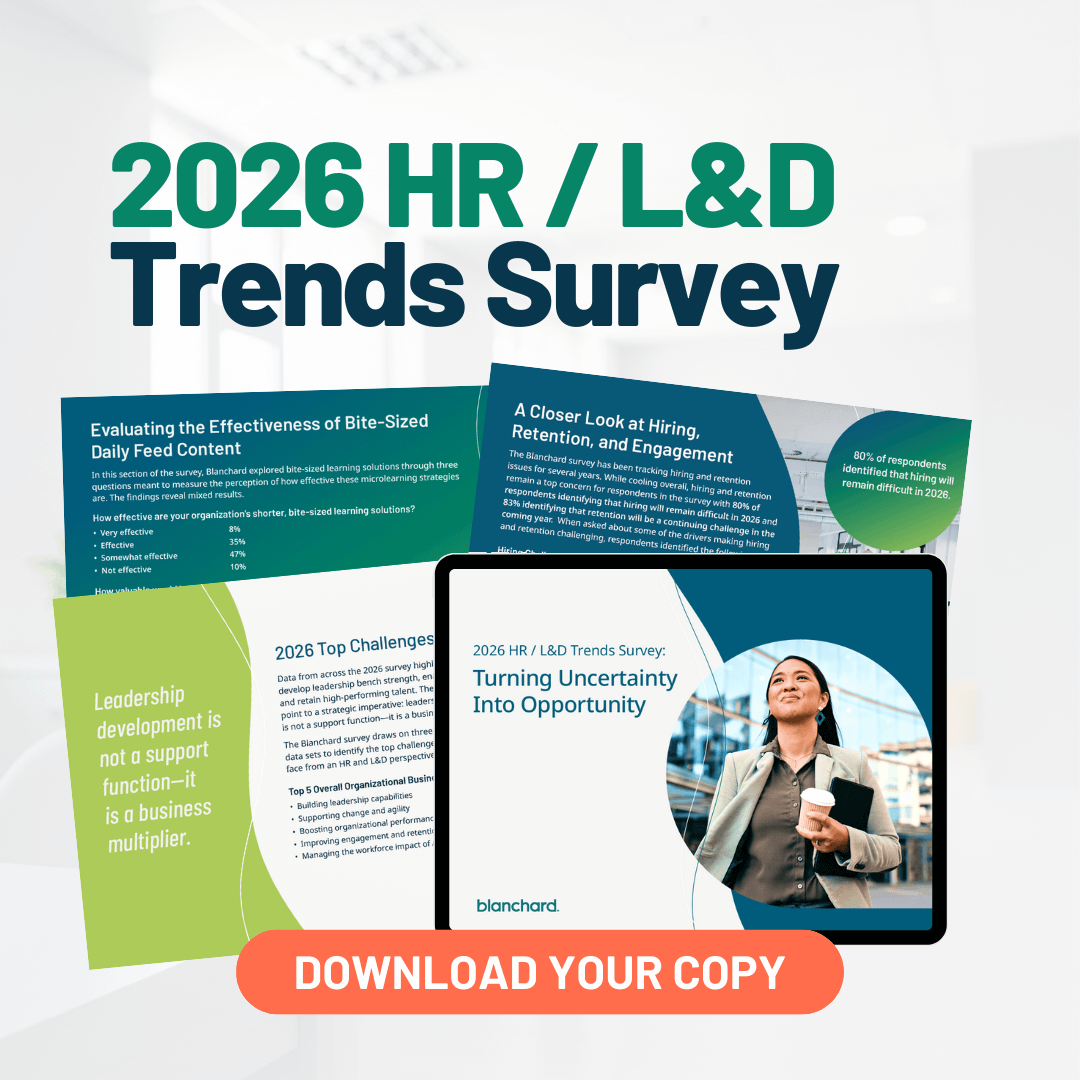
Diagnosing correctly requires leaders to move beyond assumptions and focus on observable behaviors. This is particularly vital as the 2026 HR/L&D Trends Survey reveals that front-line (52%) and mid-level managers (48%) are the highest development priorities for organizations today, as these are the roles where day-to-day coaching and execution have the most impact.
Signs to Look for in Each Development Level
Effective diagnosis begins with observation and dialogue. Leaders should look for patterns in performance, decision-making, and confidence.
- D1 indicators: Eagerness to learn, frequent questions, reliance on guidance
- D2 indicators: Frustration, inconsistent performance, declining confidence
- D3 indicators: Technical competence, hesitation in decision-making, need for reassurance
- D4 indicators: Consistent results, proactive problem-solving, self-direction
When diagnosing a D2 or D3 employee, a leader must look at the roots of low or variable commitment. According to the 2026 HR / L&D Trends Survey, ‘limited career growth potential’ is a primary driver of disengagement for 47% of employees. Effective diagnosis identifies whether a lack of a clear growth path is the reason behind a ‘disillusioned learner’s’ struggle.
In Philippine organizations, leaders sometimes hesitate to ask direct questions due to cultural norms around hierarchy and harmony. However, intentional check-ins and coaching conversations are essential to accurately assess development.
Matching Leadership Style to Development Stage

Once development levels are diagnosed, leaders must adapt their leadership style accordingly. This is where many managers struggle—not because they don’t understand the model, but because they default to a single style.
- D1 requires Directing: Clear instructions and structure
- D2 requires Coaching: Direction paired with encouragement
- D3 requires Supporting: Empowerment and confidence-building
- D4 requires Delegating: Trust and autonomy
SLII emphasizes that leadership flexibility—not consistency of style—is what drives consistent results. Leaders who fail to adapt often experience disengagement, dependency, or resistance from their teams.


Case Study: Application of Development Diagnosis in a Local Team
In a Philippine-based organization, managers noticed uneven performance across team members despite similar training. After introducing SLII® principles, leaders realized they were applying the same leadership approach to everyone.
By learning how to diagnose employee development levels using SLII®, managers adjusted their leadership behaviors—providing more structure where needed and more autonomy where appropriate. Over time, teams reported clearer expectations, improved confidence, and better manager-employee relationships.
The key insight: accurate diagnosis unlocked leadership effectiveness without changing the people—only the approach.
Tools and Templates for SLII® Diagnosis
While SLII® diagnosis is a leadership skill, structured tools help leaders apply it consistently. Common support tools help leaders pause and reflect. However, the survey notes a quality gap, with only 21% of organizations rating their development resources for managers as high quality.

Using proven frameworks like SLII® helps bridge this gap by providing high-standard, structured diagnostic tools.
- Development level assessment guides
- One-on-one conversation frameworks
- Coaching question prompts
- Leadership style reference charts
These tools help leaders pause, reflect, and diagnose intentionally—rather than reacting instinctively. When embedded into leadership training and L&D systems, they reinforce SLII as a daily practice, not a theoretical concept.
Common Errors and How to Avoid Them
Even experienced leaders make diagnosis errors. Some of the most common include:
- Confusing experience with competence
- Assuming motivation is fixed
- Using the same leadership style out of habit
- Diagnosing the person instead of the task
Avoiding pitfalls requires practice. This is underscored by the 2026 HR / L&D Trends Survey, which found that only 3% of organizations see a high level of skill application post-training. To successfully implement SLII®, accurate diagnosis must be treated as the first step in ensuring that leadership behaviors are applied effectively in real-world scenarios rather than remaining theoretical concepts.
Diagnosing Development Levels SLII: Leading with Precision and Empathy
Learning how to diagnose employee development levels using SLII® empowers leaders to lead with both clarity and care. It allows managers to respond to what their people truly need—rather than what leaders assume they need.

For Philippine organizations striving to build strong leadership pipelines, accurate diagnosis is a non-negotiable leadership skill. When leaders apply SLII with precision and empathy, teams grow faster, engagement improves, and performance becomes more sustainable.
If your leaders need support in diagnosing development levels, strengthening coaching conversations, or embedding this kind of leadership style into your organization, now is the right time to start the conversation. Reach out to explore leadership training and consulting solutions designed to help your managers lead more effectively—one situation at a time.
© 2026 Blanchard Philippines. All rights reserved. Unauthorized use, reproduction, or distribution of this content is strictly prohibited.